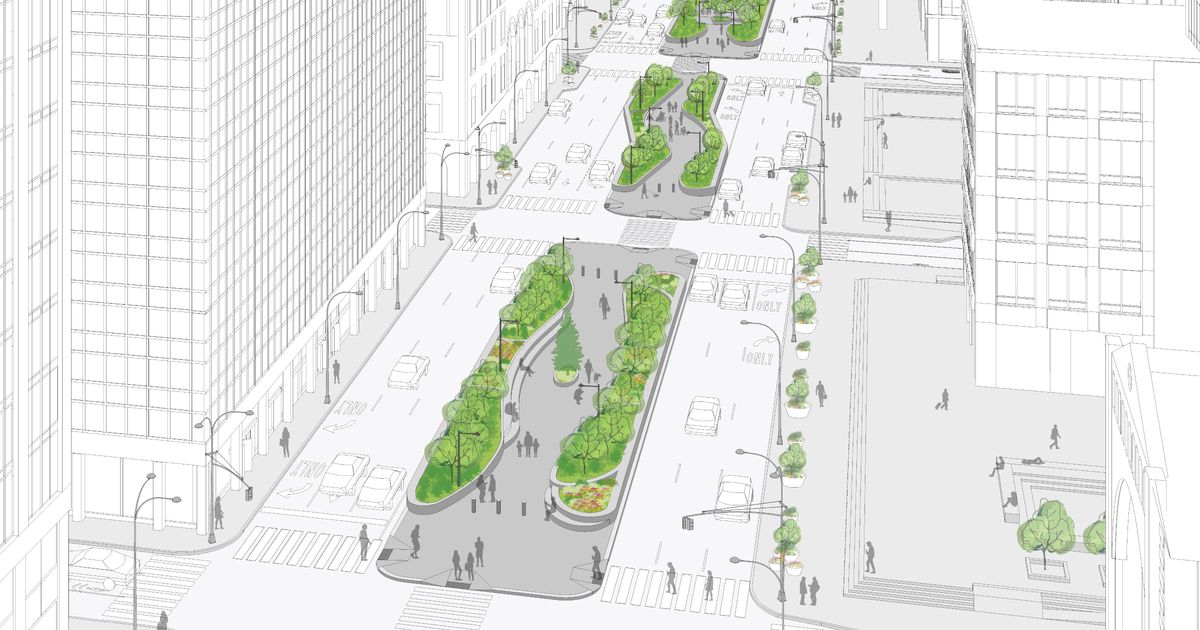
The city is weighing two competing redesigns for Park Avenue's median between 46th and 48th Streets in Midtown Manhattan. Both proposals expand the narrow green space and add seating, but they differ sharply on cycling infrastructure.
The first proposal creates a wider median with extensive seating areas, planters, and lighting. It prioritizes pedestrian comfort and lingering space without accommodating bicycles. The second scheme also widens the median and includes comparable seating, but incorporates a dedicated bike lane running through the center.
The distinction matters for multiple stakeholders. Property owners along Park Avenue benefit from either plan through enhanced streetscape appeal and foot traffic. Retail tenants gain from increased pedestrian dwell time. Office workers and visitors enjoy more outdoor space during breaks. Commuters on bikes face access constraints under the first plan, requiring them to navigate around the median or use sidewalks. The second option gives cyclists a protected route through one of Manhattan's busiest corridors.
The city's Department of Transportation will ultimately decide which vision moves forward. Both proposals represent a shift from Park Avenue's current configuration, where the median remains relatively narrow and underutilized. The expansion addresses long-standing complaints about wasted space in one of the city's most expensive commercial neighborhoods.
Real estate professionals view the median upgrade as part of broader Midtown revitalization. Enhanced public space typically correlates with higher property values and stronger leasing activity. Office landlords particularly watch these decisions, as street-level quality influences tenant retention and recruitment.
The bike lane proposal aligns with the city's broader active transportation goals. Including protected cycling infrastructure signals a commitment to reducing vehicle dependency in Manhattan's core. The seating-focused alternative appeals to those prioritizing pedestrian experience over modal choice.
Public comment periods will precede the final decision. Both options require street-level approval and construction coordination with underground utilities running beneath Park Avenue