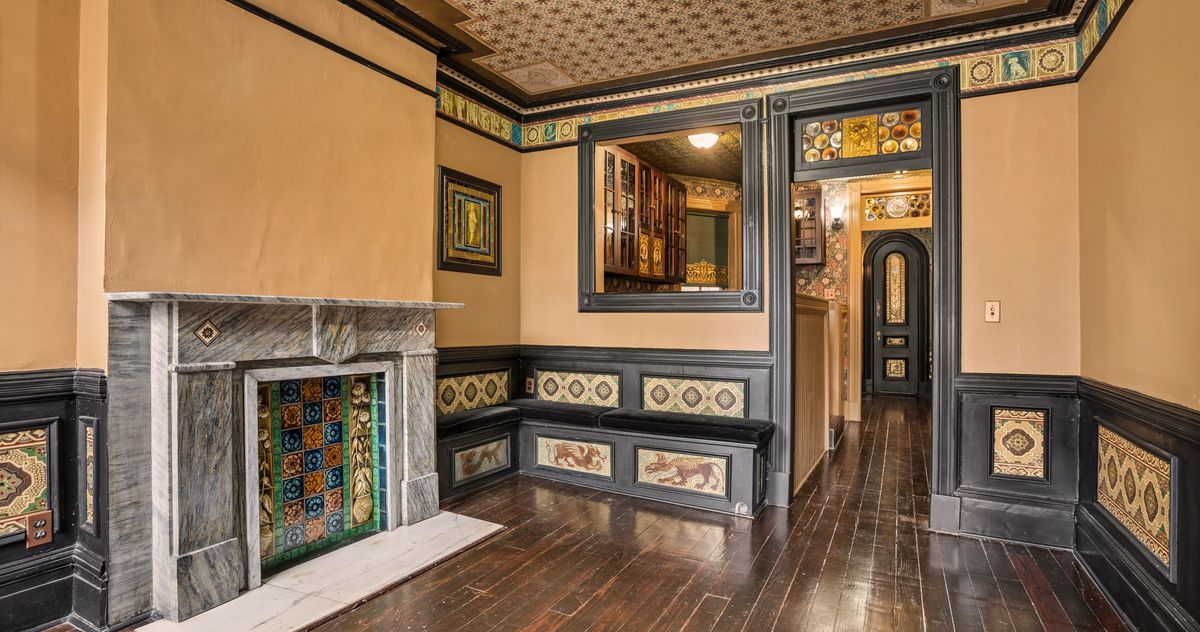
A West Village walk-up at West 10th Street commands attention through architectural illusion and historical detail rather than square footage or price tag. The five-story tenement building features elaborate trompe l'oeil murals that create the visual impression of a grander structure than its modest footprint suggests. Owner investments in period-accurate finishes, including antique glass windows and silk curtains once belonging to Theodore Roosevelt, transform what would typically be a modest rental or owner-occupied walk-up into a property with distinctive character.
The building sits in one of Manhattan's most expensive neighborhoods, where West Village properties regularly fetch millions. Yet this tenement's appeal lies not in new construction or modern amenities but in theatrical restoration and historical provenance. The trompe l'oeil technique, a French painting method creating three-dimensional illusions on flat surfaces, gives the facade Victorian grandeur without actual structural expansion.
For buyers in this market, the property demonstrates how creative renovation and authentic period details can amplify a modest building's value and appeal. A simple walk-up becomes a conversation piece. For tenants, it signals the neighborhood's ongoing gentrification and rising rents as owners capitalize on the West Village's prestige. Landlords increasingly recognize that architectural storytelling and historical authenticity attract premium-paying residents willing to overlook limited square footage in exchange for uniqueness.
The Teddy Roosevelt curtains represent the kind of provenance that drives value in New York's most competitive micro-markets. Such details command attention from design enthusiasts, architecture buffs, and wealthy residents seeking properties with narrative depth beyond standard luxury finishes. The tenement's transformation illustrates how West Village owners leverage history and craftsmanship to justify pricing in a neighborhood where even modest buildings sell for seven figures.