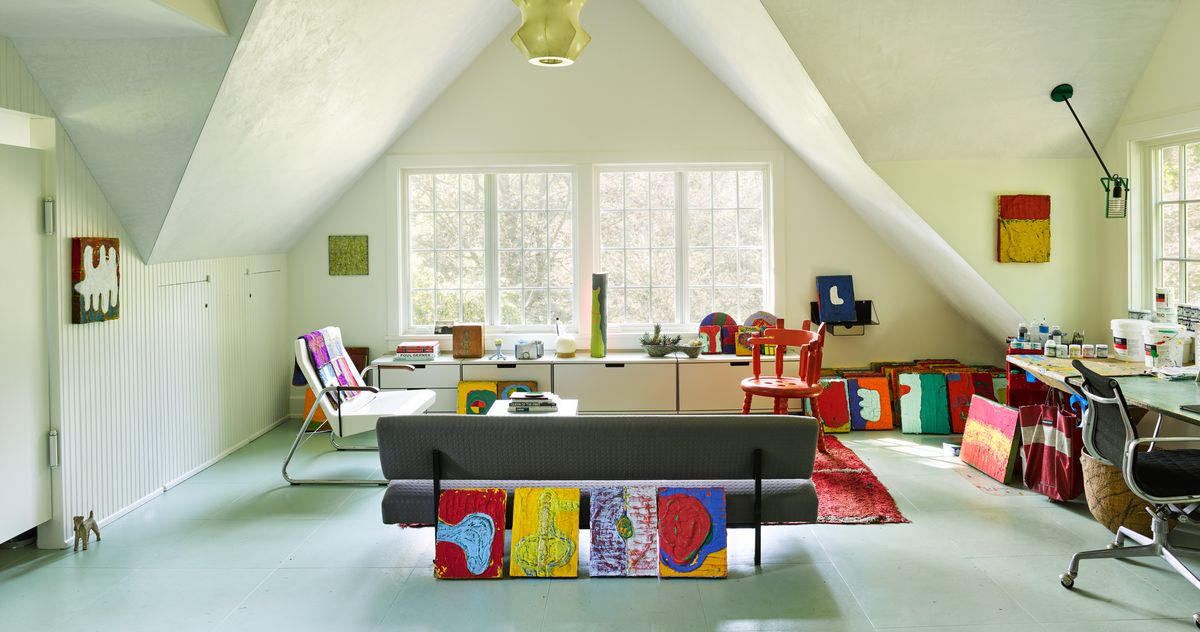
An artist couple in Connecticut transformed a neglected country house into a sprawling creative compound by gutting the structure and literally raising the roof.
The project began with a teardown candidate. The original home lacked the square footage and ceiling heights the owners needed to display their art collection and maintain separate studios for their own practice. Rather than demolish and rebuild, they chose selective deconstruction and strategic expansion.
The renovation raised the roofline substantially, creating vaulted ceilings that soar across the main living areas. This vertical expansion delivered gallery-quality wall space without consuming additional land. Large windows punched into newly constructed walls flood the interiors with natural light, essential for both viewing art and creating it.
The redesigned layout segregates living quarters from work areas. One owner operates a studio on the upper level while the other claims space on the ground floor. This separation prevents creative work from bleeding into domestic life, a practical concern for working artists sharing the same property.
The revamped home now functions as residence, gallery, and workshop simultaneously. The couple displays pieces from their collection throughout the house while maintaining professional studios equipped for their own output. The arrangement eliminates costly commercial studio rent and commercial gallery fees during development phases.
The Connecticut location offers rural quietness while remaining within reasonable distance of New York City's art market and institutional connections. Country property costs substantially less than suburban alternatives closer to the city, while delivering the acreage and structure necessary for a serious artist compound.
For renovators considering similar projects, this demonstrates the financial logic of adaptive reuse over demolition. Preserving existing foundations and structure, even on extensively altered homes, costs less than new construction while delivering highly customized spaces. The couple's approach proves that raising ceilings and expanding strategically can unlock potential in overlooked rural properties that initial inspections might classify as disposable.