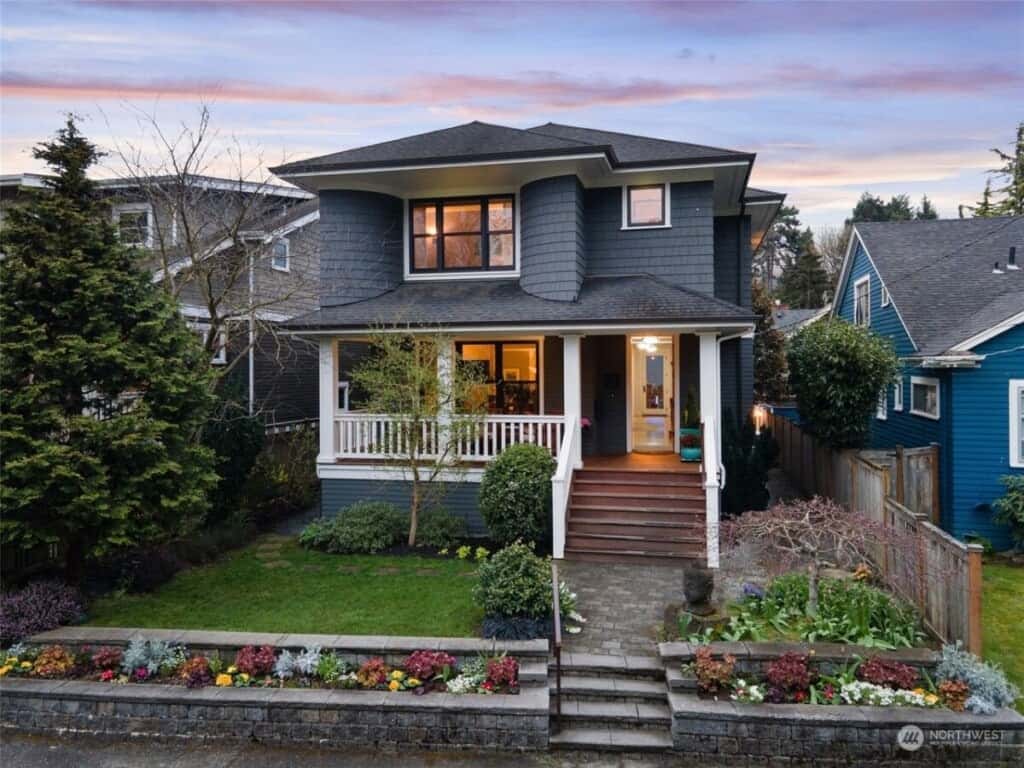
The rent-versus-buy decision hinges on local market conditions, mortgage rates, and your financial position rather than universal rules.
Renters enjoy flexibility and predictable monthly costs. Landlords handle maintenance, repairs, and property taxes. Tenants face no down payment hurdles and can relocate without selling. This works well for those valuing mobility or uncertain about staying in one place long-term.
Homeowners build equity with each mortgage payment and lock in housing costs through fixed-rate loans. Property appreciation compounds wealth over decades. Tax deductions on mortgage interest and property taxes reduce taxable income. Home equity functions as collateral for loans or emergency funds.
The math shifts by market. In expensive neighborhoods like Seattle's Denny Blaine, monthly rent payments sometimes undercut the total cost of ownership (mortgage, taxes, insurance, maintenance). In affordable markets, buying builds equity faster than renting wastes money.
Current mortgage rates matter enormously. Higher rates push monthly payments up, favoring renters. Lower rates tip the scales toward buyers. A buyer locking in 3.5 percent on a $400,000 mortgage pays roughly $1,800 monthly. Renting the same home might cost $2,500 to $3,000 per month in that neighborhood.
Down payment requirements remain the biggest barrier. Most buyers need 20 percent to avoid private mortgage insurance. On a $400,000 home, that means $80,000 upfront. Saving that amount takes time. First-time buyer programs in some states reduce down payment thresholds to 5 percent or 10 percent.
Maintenance costs burden homeowners exclusively. A new roof, HVAC replacement, or foundation repair can consume $10,000 to $25,000 instantly. Renters never face these surprises.
The decision boils down to