Laminate floors require specific cleaning techniques to avoid damage and extend their lifespan. Unlike hardwood or tile, laminate consists of a thin wear layer bonded to plywood or high-density fiberboard, making it vulnerable to moisture and scratches.
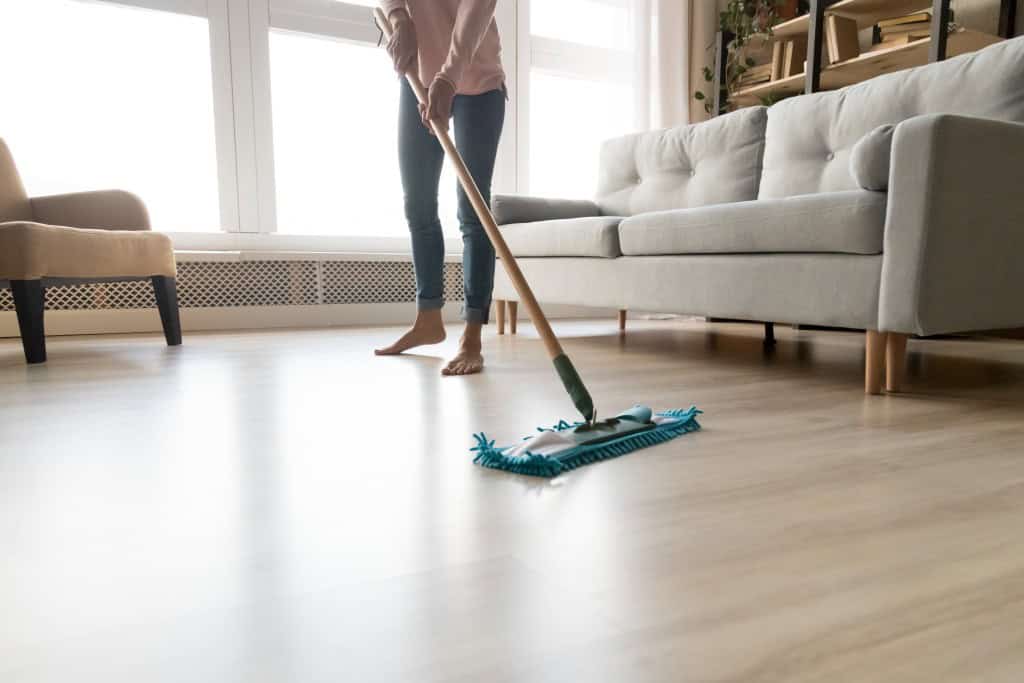
The first rule: never use excess water. Laminate absorbs liquid quickly, causing swelling, warping, and delamination. Damp mop only, using a microfiber cloth wrung out thoroughly. Excess moisture sits between planks and compromises the adhesive seal.
Avoid acidic or abrasive cleaners. Vinegar, ammonia, and harsh scouring powders strip the protective coating and dull the surface. Use pH-neutral laminate-specific cleaners instead. These remove dirt without degrading the material.
Vacuum regularly before mopping. Dirt particles act like sandpaper under foot traffic, scratching the wear layer. Vacuuming with a soft brush removes debris that wet cleaning might spread around.
Sweep spills immediately. Standing liquid on laminate causes permanent staining and swelling. Wipe up food, beverages, and pet accidents within minutes using a dry cloth.
Use furniture pads and mats in high-traffic areas. Dragging furniture across laminate creates deep scratches. Felt pads reduce friction and protect the surface. Entry mats trap moisture and dirt before they reach floors.
For homeowners considering laminate during renovations or purchases, maintaining it properly preserves resale value. Visible scratches, stains, and warping significantly reduce a home's appeal to buyers and appraisers. Well-maintained laminate flooring remains attractive for 15 to 25 years with proper care, making it a practical mid-range option compared to hardwood's higher maintenance demands or tile's grout complexity.