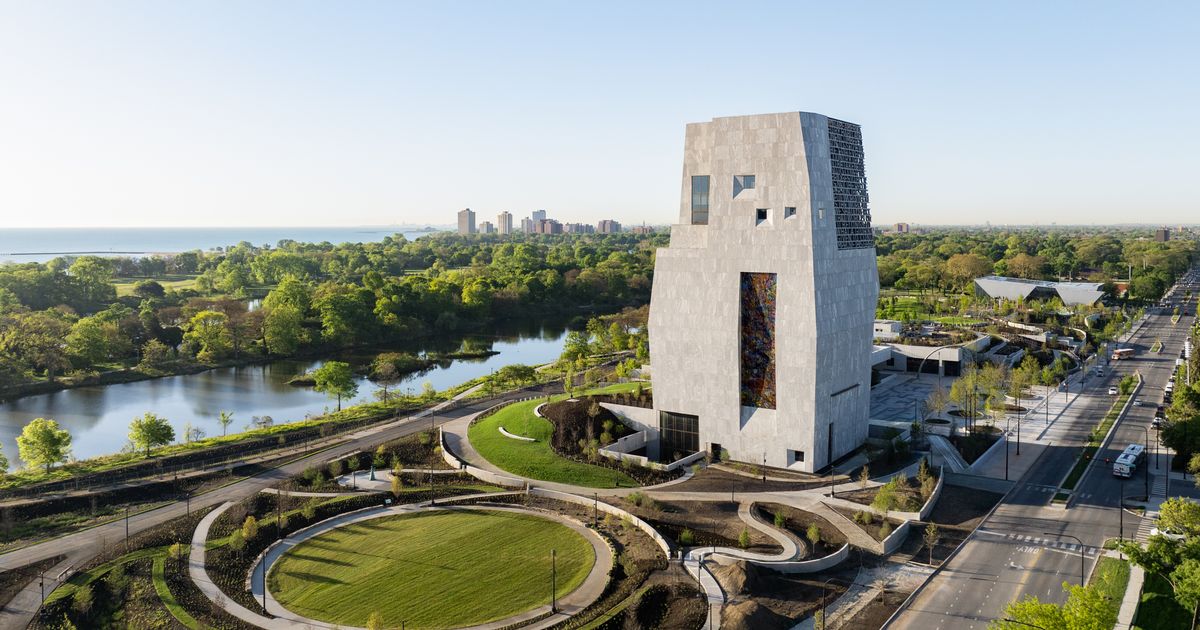
The Obama Presidential Center in Chicago opened with bold community promises but delivers a design that feels emotionally distant. The 235,000-square-foot complex, developed by the Obama Foundation and designed by Tod Williams Billie Tsien Architects, sits on 19 acres in the historic Jackson Park neighborhood on Chicago's South Side.
The center cost approximately $830 million to build. Proponents highlight its commitment to local hiring, affordable housing development, and community programming. The foundation pledged to support workforce development and expand access to parks and green space in a historically underinvested neighborhood.
Yet the building itself—clad in granite and steel—projects an austere presence. Curbed's architecture critic observes that the center prioritizes monumentality over warmth. The cold material palette creates visual separation from the surrounding community rather than inviting engagement. The design choices evoke a fortress mentality, which contradicts the stated mission of accessibility and openness.
The tension reveals a deeper issue in how major institutions approach community development. The Obama Foundation can invest heavily in local job creation and housing initiatives while simultaneously constructing a physical space that maintains psychological distance from residents it claims to serve.
This matters for Chicago's real estate market. The center anchors a broader Jackson Park revitalization effort that will reshape the neighborhood's character. Property values around the site have appreciated, benefiting existing homeowners but potentially pricing out long-time residents. New construction and commercial development follow cultural institutions, not the reverse. The center's arrival accelerates gentrification dynamics.
For renters in Jackson Park, the implications are sobering. As property values climb, landlords upgrade buildings and raise rents. Community activists worry that promised affordable housing won't materialize quickly enough to protect vulnerable tenants from displacement.
The Obama Presidential Center ultimately illustrates a paradox in 21st-century urban development. Institutions can commit resources to community benefit