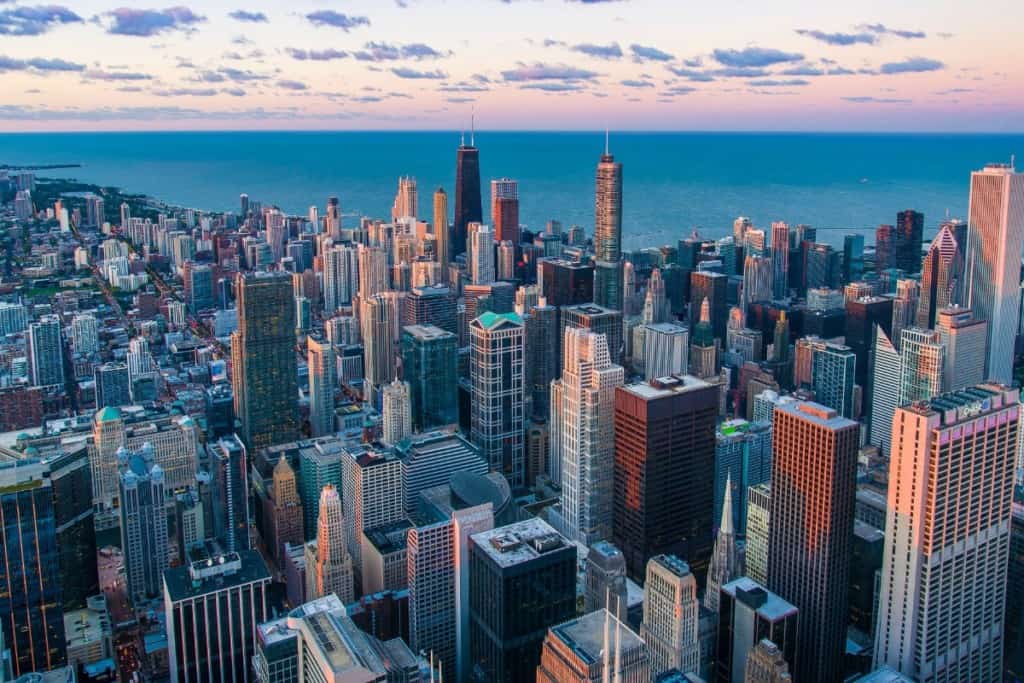
Chicago residents cite the city's walkable neighborhoods, robust public transit system, and world-class cultural institutions as top reasons for staying put. The combination of affordability relative to coastal metros and access to Lake Michigan amenities keeps both renters and homeowners rooted in the Windy City.
Neighborhoods like Wicker Park, Lincoln Park, and Pilsen attract young professionals with their mix of vintage architecture, independent restaurants, and bars. These areas command premium prices but remain cheaper than comparable Brooklyn or San Francisco zip codes. A two-bedroom in Lincoln Park runs $1.2 million to $1.8 million, while similar inventory in Wicker Park starts around $800,000.
The CTA train system connects residents across 225 miles of track, reducing car dependency and lowering transportation costs for households. This infrastructure advantage matters to renters choosing between neighborhoods and to buyers calculating total cost of ownership.
Cultural draw matters too. The Art Institute, Museum of Contemporary Art, and Chicago Symphony Orchestra rank among America's finest. The lakefront offers 26 miles of public beach access and parks, a feature absent from competing inland metros.
For investors, Chicago's rental market delivers steady returns. Class-B apartment buildings in gentrifying neighborhoods like Bridgeport and Englewood attract institutional capital seeking value-add opportunities. Entry-level rents in these areas range from $1,100 to $1,400 for a one-bedroom, with annual rent growth averaging 3 to 4 percent over the past decade.
Homebuyers benefit from neighborhoods at different life stages. First-time buyers find entry points in Logan Square and Ukrainian Village around $500,000 to $700,000. Empty-nesters upgrade to Gold Coast penthouses or lakefront condos north of $3 million.
The food scene drives migration too. James Beard Award winners operate across