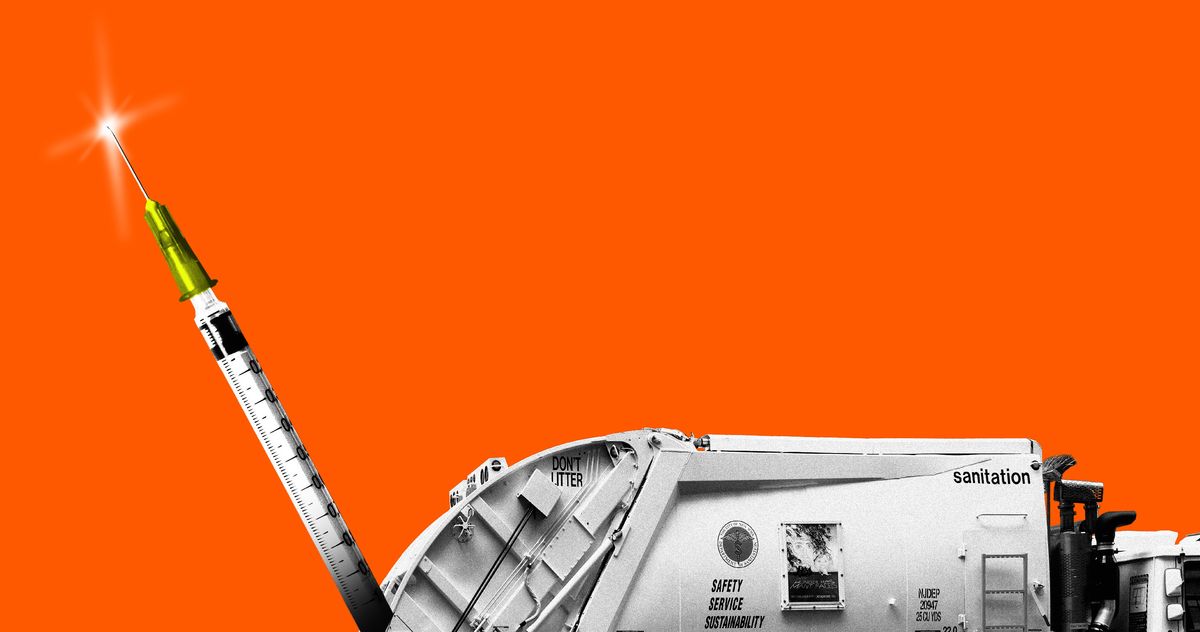
Sanitation workers across multiple cities report rising needle-stick injuries from improperly disposed medical waste, with growing suspicion that GLP-1 and peptide users contribute significantly to the problem.
Workers in New York, Los Angeles, and Chicago have documented sharp increases in needlestick incidents over the past 18 months. Union representatives say injuries jumped 40 percent in some districts. The culprit appears to be residential trash containing syringes and needles from injectable medications, particularly GLP-1 drugs like Ozempic and Mounjaro, alongside peptide compounds popular in fitness communities.
Proper disposal requires sealed sharps containers and drop-off at designated facilities. Instead, many users toss used needles directly into household garbage, creating hazards for sanitation workers handling bags and operating collection trucks. One worker in Manhattan suffered a needlestick from a syringe buried in kitchen waste.
The surge tracks with explosive growth in GLP-1 prescriptions and the booming market for compounded peptides sold online without medical oversight. Demand for these injectables skyrocketed as celebrities and fitness influencers promoted them. Many users lack access to proper disposal education or sharps containers.
Public health departments in major metros now face pressure to launch awareness campaigns. New York City's Department of Sanitation launched a "Needle Safe" initiative offering free sharps containers and disposal guidance. Los Angeles requires hazard pay increases for sanitation crews. Chicago's union negotiated for needle-resistant gloves and enhanced training.
Landlords report frustration managing tenant misconduct. Some buildings implement sharps container stations in common areas. Property managers argue residents receive inadequate guidance on medical waste disposal at lease signing.
For buyers and renters in urban areas, this signals a growing community health problem. Residential buildings increasingly need sharps disposal infrastructure. Property values in neighborhoods with