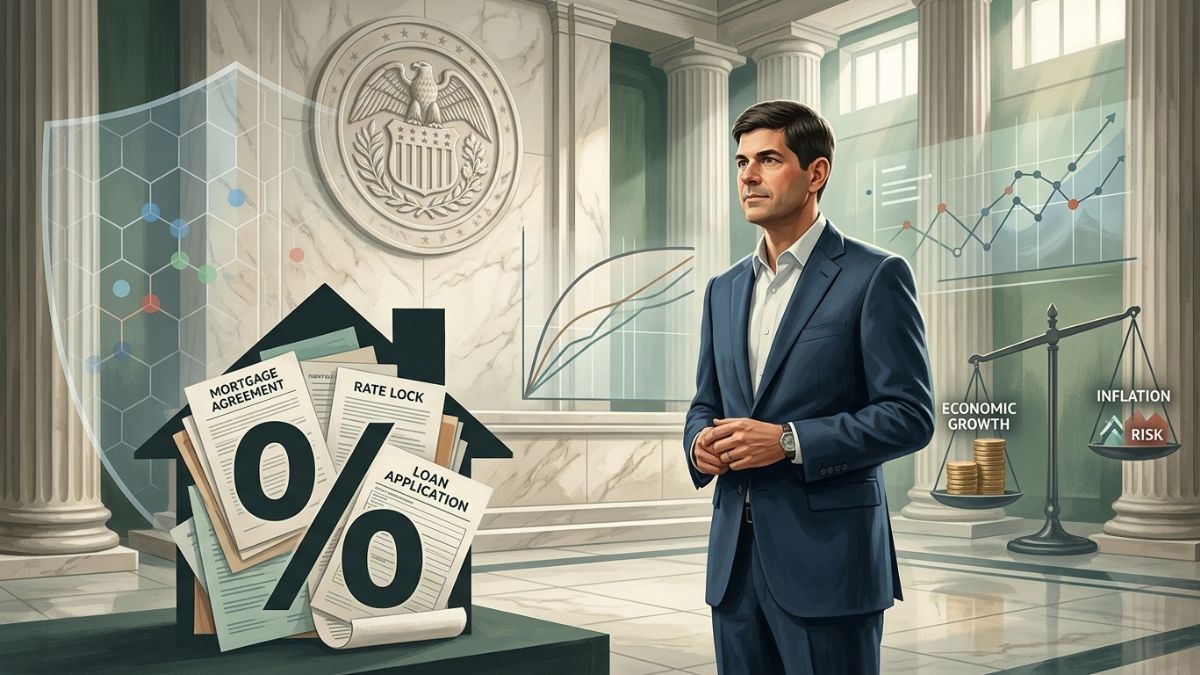
# With Warsh's Fed Overhaul, Mortgage Rates Face New Risk
Kevin Warsh's proposed framework for the Federal Reserve could reshape how the central bank manages interest rates, creating fresh uncertainty for mortgage borrowers and lenders alike.
Warsh, a former Fed governor and Trump administration official, has outlined structural changes to Fed operations that would alter the mechanics of monetary policy. His approach focuses on rules-based decision-making rather than the discretionary approach the Fed currently employs under Chair Jerome Powell.
For the mortgage market, this matters. Rules-based frameworks typically reduce the Fed's flexibility to respond quickly to economic shocks. That inflexibility could mean less aggressive rate cuts during downturns or slower adjustments to changing inflation conditions. Mortgage lenders and borrowers would face less certainty about Fed actions, potentially widening rate spreads as lenders demand compensation for this new risk.
Home buyers already grappling with elevated borrowing costs could see rates stay persistently higher under a Warsh-led framework. Lenders like Rocket Mortgage and Better.com would need to recalibrate their pricing models. Banks holding mortgage-backed securities would reassess portfolio risk.
Sellers in soft markets like Austin, Phoenix, and Miami face additional headwinds. Higher mortgage rates suppress buyer demand. Sellers anchored to pre-2022 price expectations will encounter resistance from prospective buyers who can no longer afford previous price points.
Landlords holding adjustable-rate debt tied to Fed policy face their own pressure. A rules-based framework could lock rates at higher levels longer, eating into rental income and refinancing opportunities.
The housing market thrives on rate predictability. The current regime, for all its flaws, has allowed builders and financiers to model demand with some confidence. Warsh's approach introduces a new variable. Homebuilders like D.