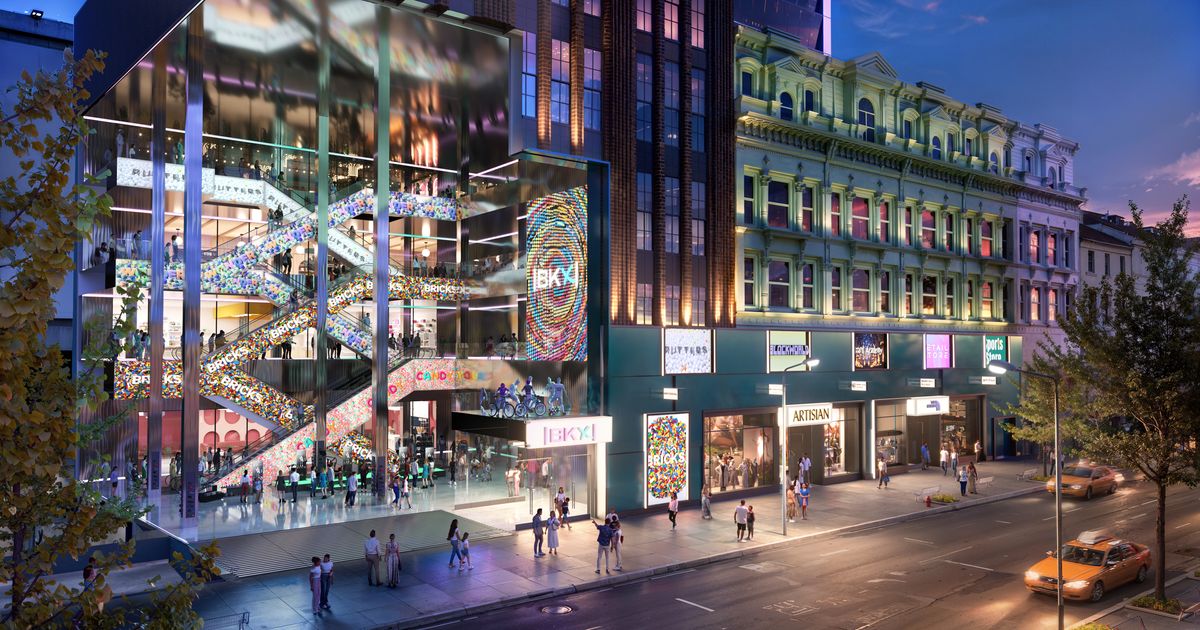
# Vegas Lite Is Coming for the Former Brooklyn Macy's
A massive redevelopment of the defunct Macy's building in Brooklyn signals a shift toward what local shoppers actually demand. The former department store, long a vacant eyesore, will transform into a mixed-use destination combining retail, dining, and entertainment.
The project reflects a hard truth about traditional retail. Department stores lost ground because they failed to adapt. This redevelopment ditches that model entirely. Instead of a single anchor tenant, developers are betting on a curated mix of smaller retailers, restaurants, and experiential venues that mirror successful Las Vegas entertainment districts, hence the "Vegas Lite" descriptor.
For Brooklyn residents, this means walkable entertainment without traveling to Manhattan. The development targets younger demographics and families seeking dining and leisure options alongside shopping. Local tenants and boutique operators could secure affordable ground-floor space, though market rates will ultimately determine final pricing.
The broader real estate implication matters for investors and property owners. Vacant flagship retail locations represent dead capital. Brooklyn's development proves conversion works better than preservation. Other major cities with defunct department stores should take note. The economics favor demolition and ground-up development or aggressive adaptive reuse.
For landlords, the message is clear. Hold out for a single tenant at Depression-era rents, or unlock value through diversified programming. For tenants, mixed-use density creates foot traffic that benefits smaller operators.
Brooklyn's market remains competitive. Prime locations command premium rates, but the Macy's redevelopment justifies investment because it solves a real problem. Empty storefronts kill neighborhoods. Active, mixed-use spaces revive them.
This project won't be the last. Similar transformations will accelerate across American cities as traditional retail continues its long decline and developers recognize that "third place" experiences, not shopping alone, drive real estate value.