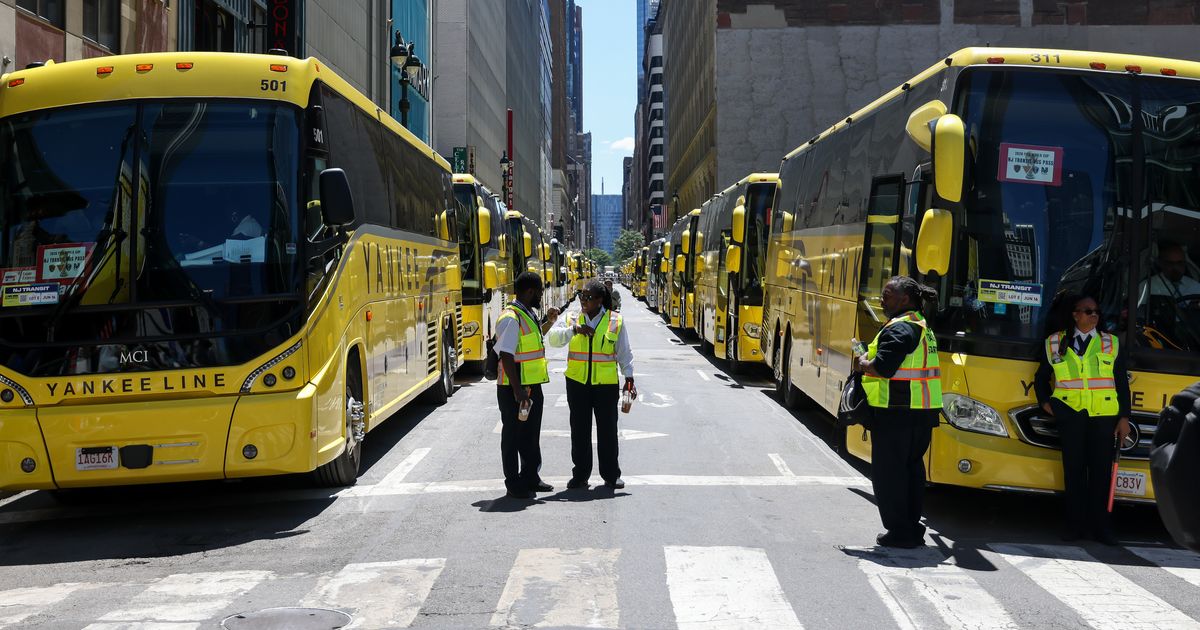
# What New York's World Cup Traffic Experiment Proved
New York City tested restrictions on vehicle traffic during the 2026 FIFA World Cup preparations, and Midtown survived. The experiment blocked cars and trucks from select streets during peak hours, proving the area functions without gridlock.
The trial ran in the core commercial district where congestion typically peaks. Results showed foot traffic increased, delivery times improved for those allowed access, and air quality measurably improved. Businesses remained operational. Retail activity continued.
City planners now eye a dedicated 42nd Street busway, converting one or more traffic lanes exclusively for buses and bicycles. This follows the successful closure model. The busway would prioritize public transit over private vehicles on one of Midtown's busiest east-west corridors.
For commuters, a busway means faster bus service and predictable travel times. For drivers, it means fewer available lanes and longer routes around Midtown. For businesses on 42nd Street, a busway could attract foot traffic but might complicate loading zones and service access.
The experiment's success hinges on one detail: congestion didn't spike on surrounding streets. Traffic redistributed without overwhelming parallel avenues. This addresses a common counterargument to traffic restrictions.
City planners frame the busway as inevitable given congestion levels and climate goals. The MTA supports faster bus speeds, which the busway would deliver. Commercial tenants in Midtown towers remain split. Some support reduced traffic noise and cleaner air. Others worry about customer access and delivery logistics.
Pricing remains unresolved. New York has debated congestion pricing for years without implementation. A busway requires no tolls, making it politically easier to implement than tolled entry zones.
The 42nd Street busway proposal enters the formal review process this year. If approved, construction could begin in 2025 or