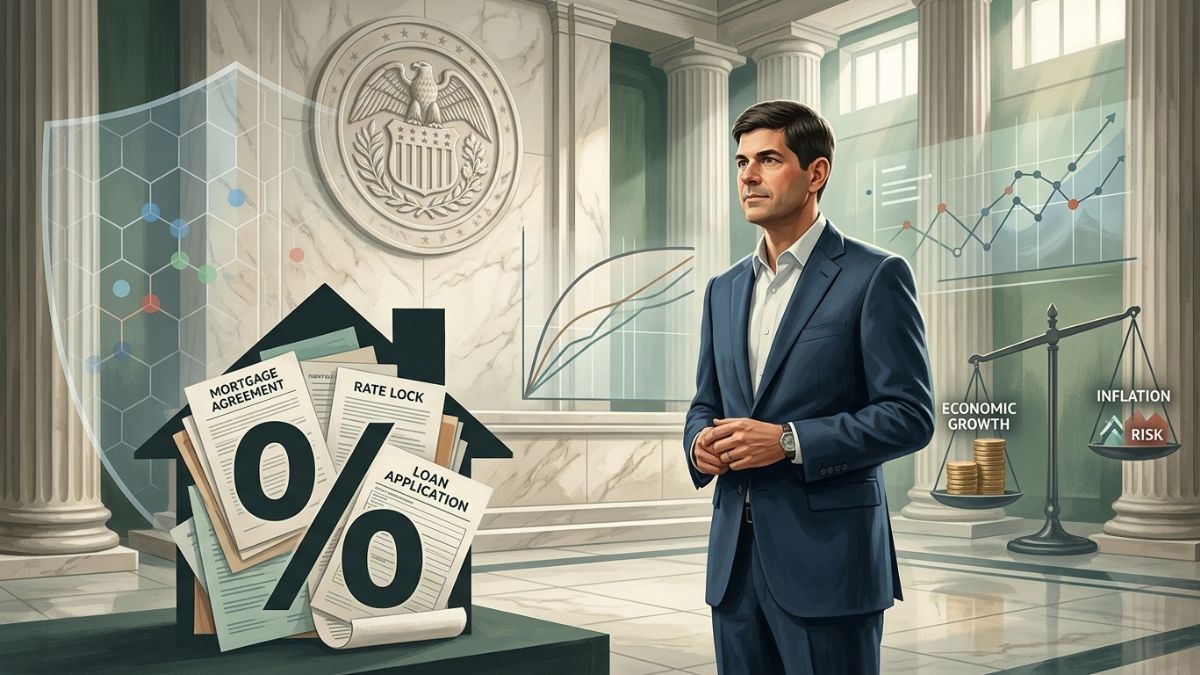
The Federal Reserve's decision to hold rates steady masks a hawkish shift in monetary policy that will ripple through housing and real estate markets. Fed officials Lorie Logan and Beth Hammack, both interest rate hawks, secured three major wins despite no rate increase announcement.
Nominal yields climbed sharply, with 10-year Treasury yields rising above 4.5 percent. Real yields, adjusted for inflation, also moved higher. This tightening effect happens without an official rate hike, making it a backdoor path to restrictive policy. The Fed's updated projections signaled fewer rate cuts ahead than markets previously priced in, cementing the hawkish lean.
For home buyers, this matters immediately. Mortgage rates track closely with 10-year yields. Higher yields push rates up, shrinking affordable purchase prices. A buyer pre-approved for a $400,000 loan at 6 percent sees that buying power drop to roughly $370,000 at 6.5 percent. Monthly payments jump $150 on identical mortgages.
Sellers face headwinds too. Reduced buyer pool demand translates to slower listing activity and softer price growth. Markets already cooling in 2024 may slow further.
Landlords and property investors see cap rates compress as higher discount rates reduce property valuations. Refinancing becomes more expensive. New acquisition loans cost more, pressuring returns on multifamily and commercial deals.
Renters catch a break temporarily. Lower demand reduces landlord urgency to raise rents aggressively. But this relief gets temporary. Higher cap rates eventually push investors toward alternative assets, reducing rental supply growth.
For commercial real estate, higher real yields hurt office and retail properties already stressed by telework and e-commerce. Industrial and multifamily properties with strong fundamentals hold up better, but refinancing windows narrow. Lenders