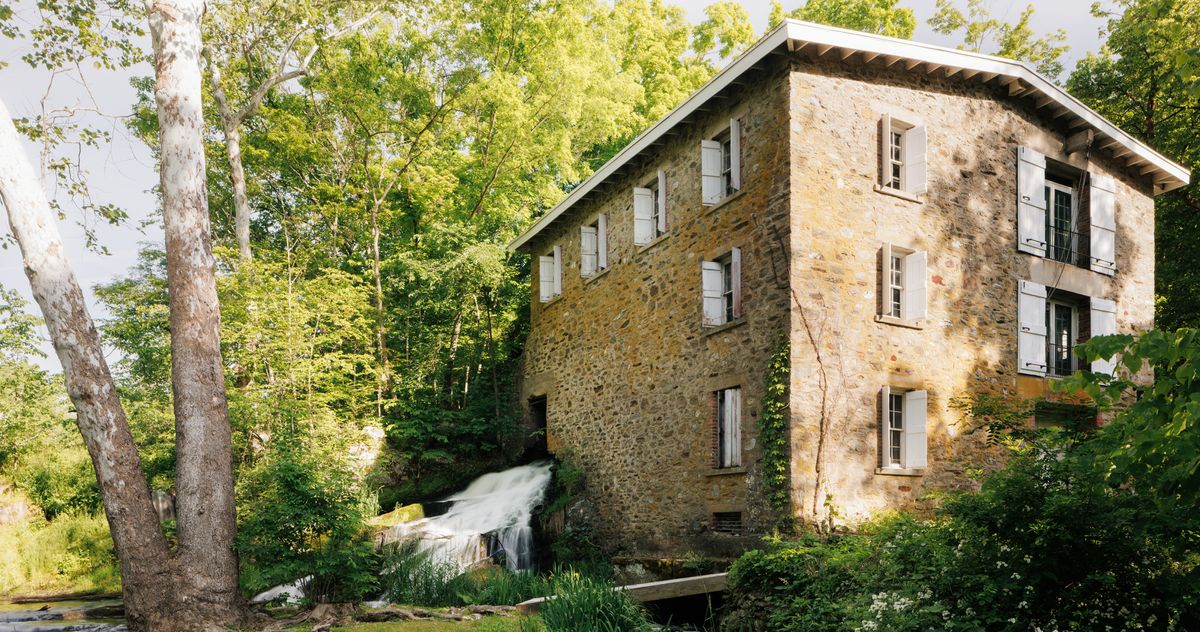
A prop stylist has transformed her family's historic mill compound into a carefully curated living space that honors both its industrial heritage and contemporary design sensibility. The property centers on a natural waterfall, a feature the owners preserved during extensive renovations that converted the old mill into a residential compound.
The stylist, who works professionally in prop styling, brought her design expertise to the family project. Her parents originally undertook the renovation, but she has become the primary caretaker of the aesthetic vision. The compound reflects meticulous attention to detail across multiple structures built around the waterfall feature.
The renovation preserved the mill's original bones while updating systems and interiors for modern living. The waterfall serves as both a practical water source historically and now functions as a landscape centerpiece that defines the property's character. This natural element shaped how the family approached the design, creating spaces that work with rather than against the existing geography.
The project demonstrates how families with design backgrounds can leverage their professional skills in residential renovation. The prop stylist's trained eye influences everything from material selection to spatial arrangement. Her work maintains the compound as a living project, continuously refined through her lens as a design professional.
The property represents a specific type of adaptive reuse becoming more common among affluent homeowners. Historic industrial sites offer larger land parcels and distinctive architectural bones that appeal to design-conscious buyers. The waterfall feature provided an anchor for the renovation, giving the family a compelling reason to preserve the site rather than demolish and rebuild.
This approach requires substantial capital investment and design expertise that not all homeowners possess. The family's multigenerational involvement and the stylist's professional background positioned them uniquely to execute the vision successfully. The compound stands as evidence that historic mills can transition into compelling residential spaces when approached with respect for original features and contemporary design standards.