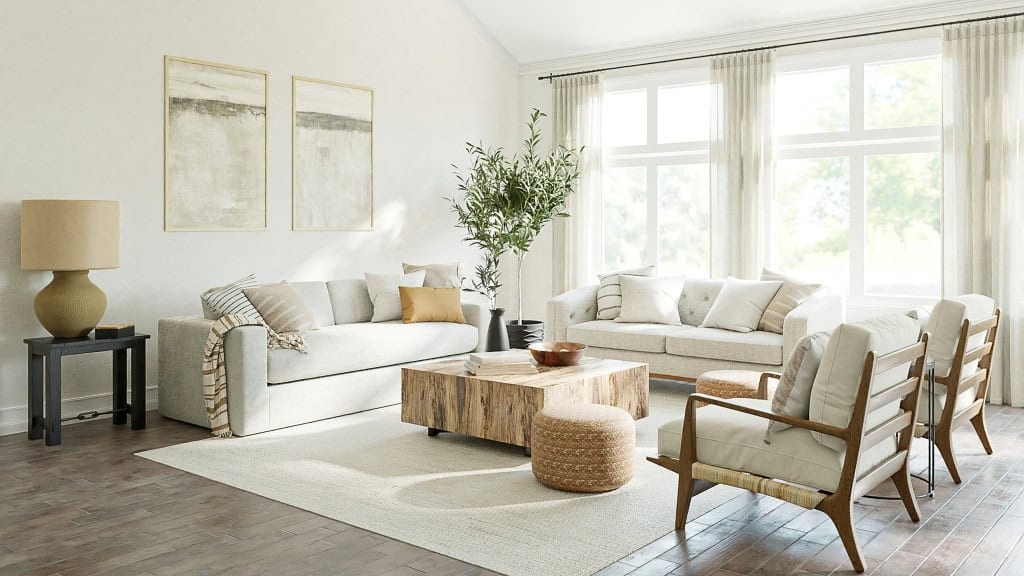
Soft staging transforms homes for sale without expensive renovations or furniture rental commitments. This budget-friendly approach uses existing décor, thoughtful arrangement, and minor enhancements to create buyer appeal.
The strategy focuses on decluttering first. Removing personal items, excess furniture, and visible clutter opens up rooms and helps buyers envision their own lives in the space. Empty surfaces and organized closets signal a well-maintained property.
Lighting matters enormously. Sellers should open all blinds and curtains during showings to maximize natural light. Adding soft lamps in dark corners creates warmth. Bright, welcoming spaces feel larger and more inviting than dim ones.
Fresh flowers, plants, or greenery add life to entryways and living areas without cost if you grow them. A single vase on the dining table or kitchen counter provides visual interest. Green plants improve air quality and suggest a cared-for home.
Neutral décor appeals broadly. Swapping out bold throw pillows for whites, grays, or beiges removes style obstacles. Neutral artwork or temporarily covering walls in busy patterns prevents clashing with buyer preferences.
Scent influences perception. Baking cookies or brewing fresh coffee creates homey associations. Commercial scents work too, but subtle options beat artificial fragrances that trigger allergies.
Furniture arrangement opens flow. Pushing pieces toward walls rather than centering them creates apparent square footage. Removing unnecessary furniture from smaller rooms eliminates cramped feelings.
Clean bathrooms and kitchens require attention. Sparkling counters, organized cabinets, and spotless fixtures demonstrate maintenance. These rooms heavily influence purchase decisions.
For sellers on limited budgets, soft staging delivers measurable results. Buyers respond to clean, bright, uncluttered spaces that feel move-in ready. Real estate agents increasingly recommend soft staging over traditional staging because it