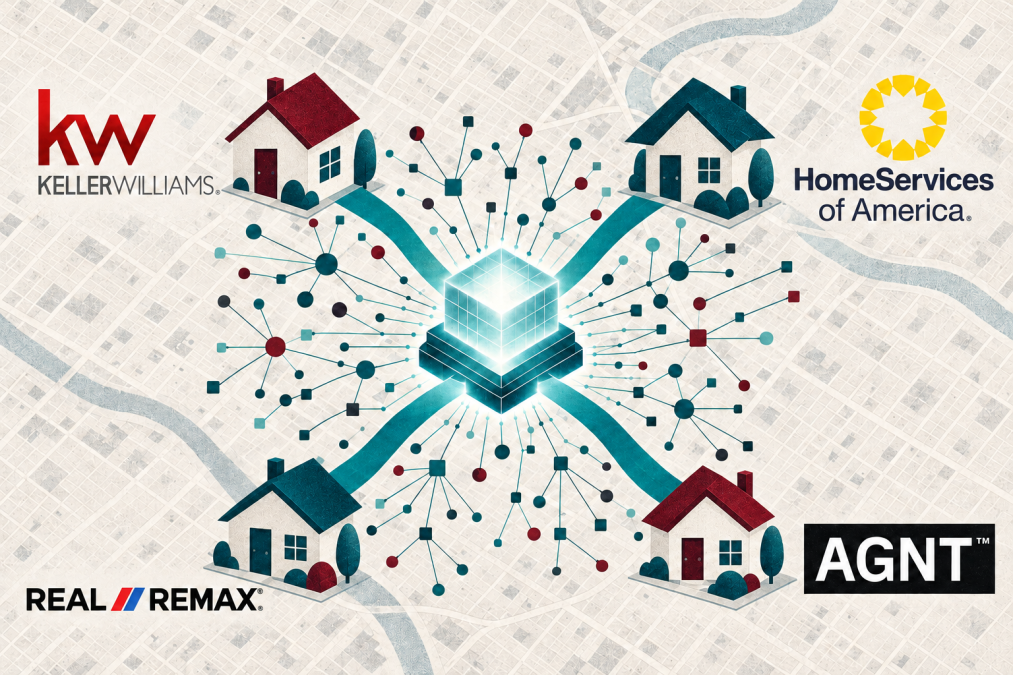
# Real Estate Giants Build Unified Listings Platform to Reshape MLS Competition
Four of the nation's largest real estate brokerages have formed an alliance to create a shared national listings database, fundamentally challenging the traditional multiple listing service model that has dominated U.S. real estate for decades.
eXp Realty, NextHome, HomeServices of America (Berkshire Hathaway's unit), Keller Williams, and Real REMAX Group announced plans to launch a collaborative data-sharing platform. This move bypasses traditional local and regional MLSs, creating direct competition against the fragmented MLS system that currently controls property listings.
The partnership addresses longstanding friction within the industry. Brokers have complained for years about MLS fees, data access restrictions, and the operational complexity of managing listings across multiple regional systems. The traditional MLS structure requires agents to input property data into localized databases, creating redundancies and slowing information flow across markets.
This new platform allows these brokerages to share listings directly among their agents and affiliated brokers without routing transactions through traditional MLSs. eXp Realty, the largest of the group by agent count, operates over 80,000 agents globally. Keller Williams controls nearly 200,000 agents in the United States. HomeServices employs approximately 37,000 real estate professionals. NextHome franchises operate in all 50 states with thousands of agents. Real REMAX Group represents another significant agent network.
Combined, these firms command roughly one-third of U.S. real estate agents. That concentration of market power gives their platform immediate relevance and leverage.
For sellers and buyers, the change could mean faster property exposure and tighter communication loops between brokerages. Listings published on this shared platform reach a massive pool of agents simultaneously, potentially accelerating buyer-seller matches. However, the move creates a two-tier system. Properties listed through participating brokerages enjoy exposure to this larger network first, while sellers working with independent brokers or smaller firms may experience delayed access.
For real estate agents and brokers, this platform reduces reliance on traditional MLSs and their associated fees. Agents at participating firms gain immediate access to co-brokerage opportunities without conventional MLS gatekeeping. Smaller brokerages and independent agents face pressure. Their listings may not reach this elite network as quickly, creating a competitive disadvantage. Agents working outside these five networks must still depend on traditional MLSs for broad exposure.
The arrangement also raises regulatory questions. The U.S. Department of Justice and Federal Trade Commission have scrutinized real estate industry consolidation and MLS practices for years. A unified database controlled by five major brokerages could draw antitrust scrutiny if the system excludes competitors unfairly or creates barriers for independent operators.
MLS organizations nationwide must now respond. Some regional MLSs will likely accelerate technology upgrades and fee restructuring to retain member loyalty. Others may negotiate data-sharing agreements with these major brokerages to remain relevant.
This platform launch marks a watershed moment for real estate infrastructure. Rather than reforming existing MLSs from within, the industry's largest players opted to build parallel infrastructure outside the traditional system. The success of this venture will shape whether MLSs modernize aggressively or lose market influence over the next five years.