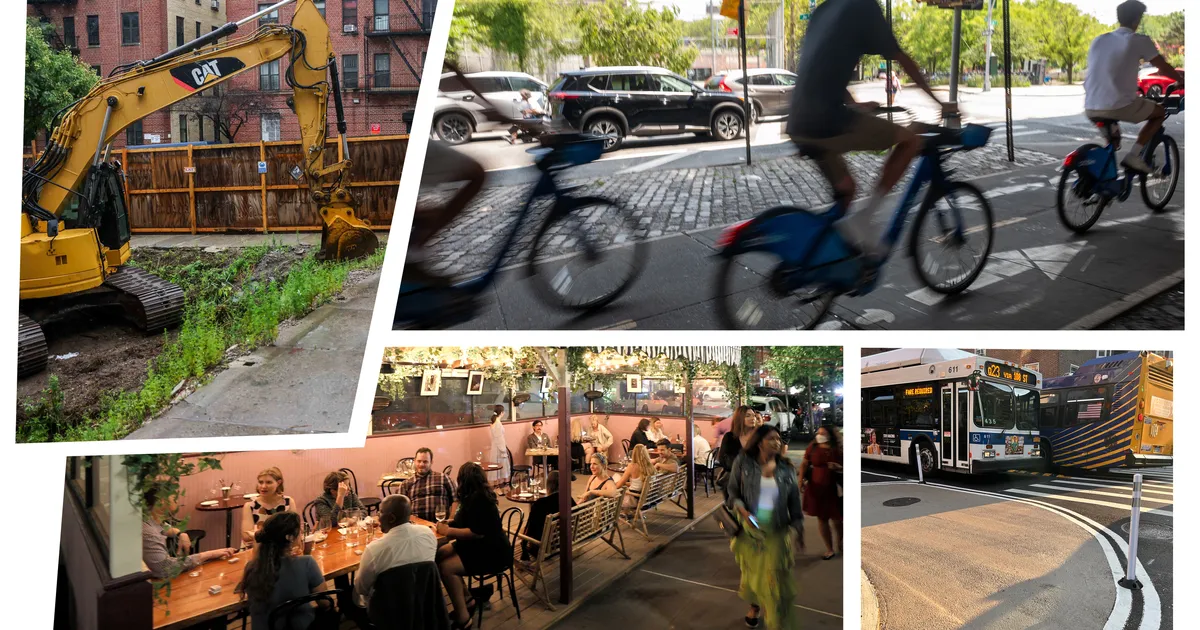
New York voters passed five ballot measures Tuesday, each receiving more than 61 percent support. The proposals, developed by a Commission on Government Efficiency led by Zohran Mamdani, aim to cut red tape and address affordability through faster city government.
Proposition 1 speeds up permitting for outdoor cafés and streeteries, benefiting the dining and hospitality industry. Proposition 3 will allow the city to more quickly sell unused development rights from landmarked properties it owns. Proposition 4 creates a hub for construction-permit applications, centralizing approvals. A third proposal makes it easier for the city to start bike- and bus-lane projects.
Carlo Scissura, president and CEO of the New York Building Congress, said Proposition 4 will "give our members one place to submit and track construction approvals, cutting repetitive paperwork and making it easier to see exactly where a project is stuck." He added the reforms will "save money, reduce delays, and help us build the housing, infrastructure, and public improvements our city needs."
Peg Breen, president of the New York Landmarks Conservancy, expressed concerns about Proposition 3. She asked where development rights will go and what development will look like, saying communities deserve input on neighborhood changes. Ben Furnas, executive director of Transportation Alternatives, countered that Proposition 3 will "prevent a small minority of people from being able to sue and block and delay in an undemocratic process."
Rachael Fauss, a senior policy adviser at Reinvent Albany, offered cautious optimism, noting the ballot measures' success will depend on whether new data shows government is moving faster.