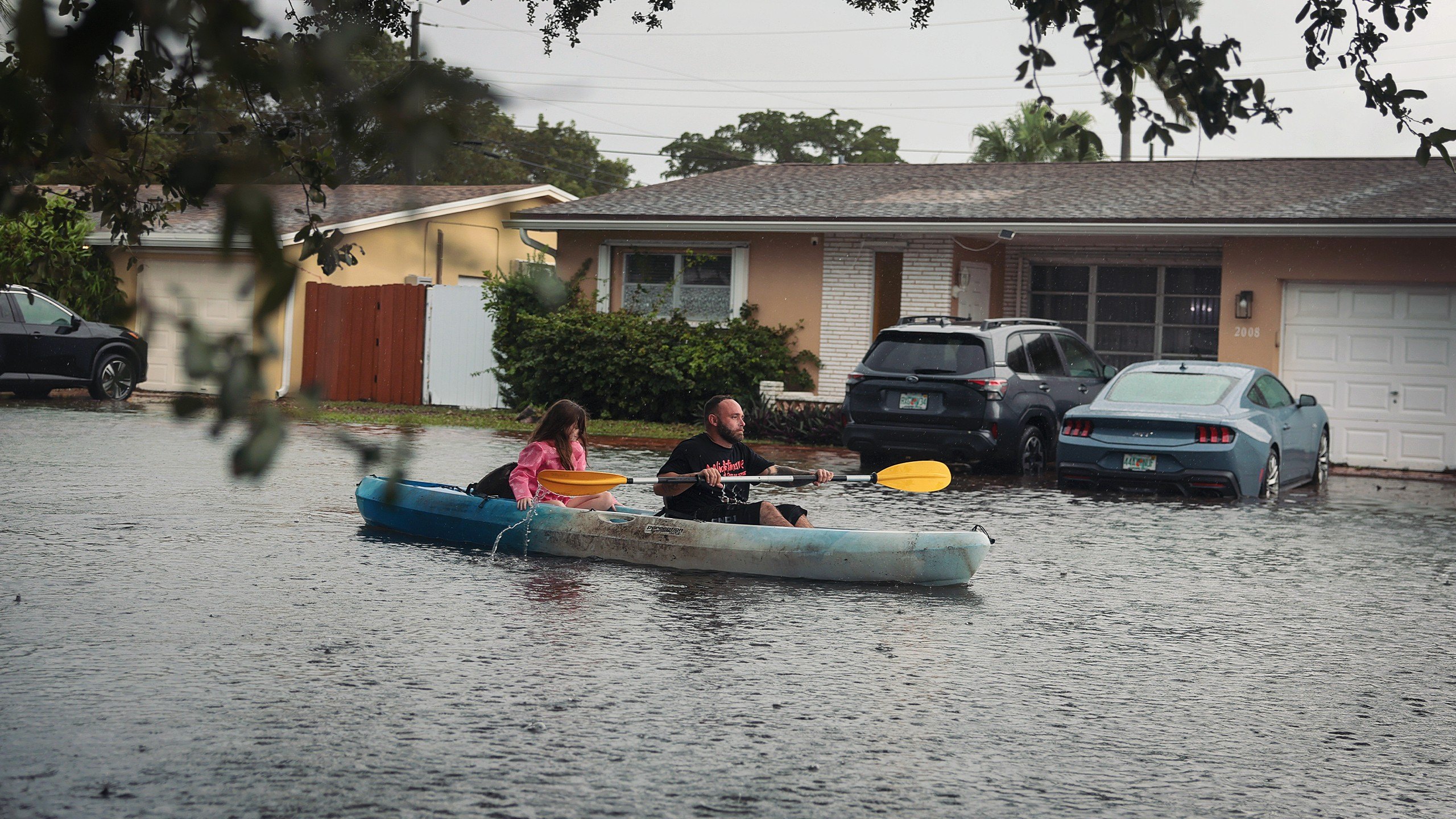
Florida is experiencing unusual heavy rainfall during its normally dry season, with Broward County and Central Florida communities facing significant flooding. On November 18, West Hollywood received over 15 inches of rain in 24 hours, while surrounding areas got about 10 inches. Broward County and Hollywood declared states of emergency, with Hollywood officials urging residents to shelter in place.
Forecasters predict 2 to 4 inches more rainfall across Eastern Florida through week's end, with 4 to 8 inches expected from Miami to Jacksonville between Tuesday and Friday. Some areas may receive up to 12 inches.
The flooding has exposed a major insurance gap. The Realtor.com 2026 Housing and Climate Risk Report found that over 6% of U.S. homes face severe flood risk, worth almost $3.4 trillion in property value. Meanwhile, active flood insurance policies from the National Flood Insurance Program fell 4.5% between May 2025 and May 2026, dropping from 3.62 million to 3.45 million policies.
Moody's flood risk analysis found potential uninsured residential flood losses could exceed $375 billion in a modeled 1-in-100-year flood scenario, creating a 65% national insurance protection gap.
Chris Bacon, chief operating officer of Openly in Boston, identified four reasons homeowners lack adequate flood protection. Most don't live in high-risk zones and don't consider flooding a threat. Flood insurance costs are high. Mortgage companies don't require it unless homes are in high flood risk zones. And NFIP coverage maxes out at $250,000, often below rebuilding costs.
John Espenschied, owner of InsuranceBrokers.com in O'Fallon, Missouri, recommends Florida homeowners compare deductibles and start dates between NFIP and private insurers. Federal coverage typically takes 30 days to activate.
Homeowners can reduce flood damage through precautions: clearing gutters and storm drains, installing sewer backflow check valves, elevating HVAC equipment and water heaters above expected flood levels, grading soil away from foundations, and extending downspouts. Keep sandbags or flood barriers on hand and know evacuation routes.
For swimming pools, avoid complete draining, as hydrostatic pressure can damage the shell. Instead lower water levels 1 to 2 feet, turn off equipment at the breaker, and secure loose furniture inside. Move high-value items to upper levels and store important documents in waterproof containers.