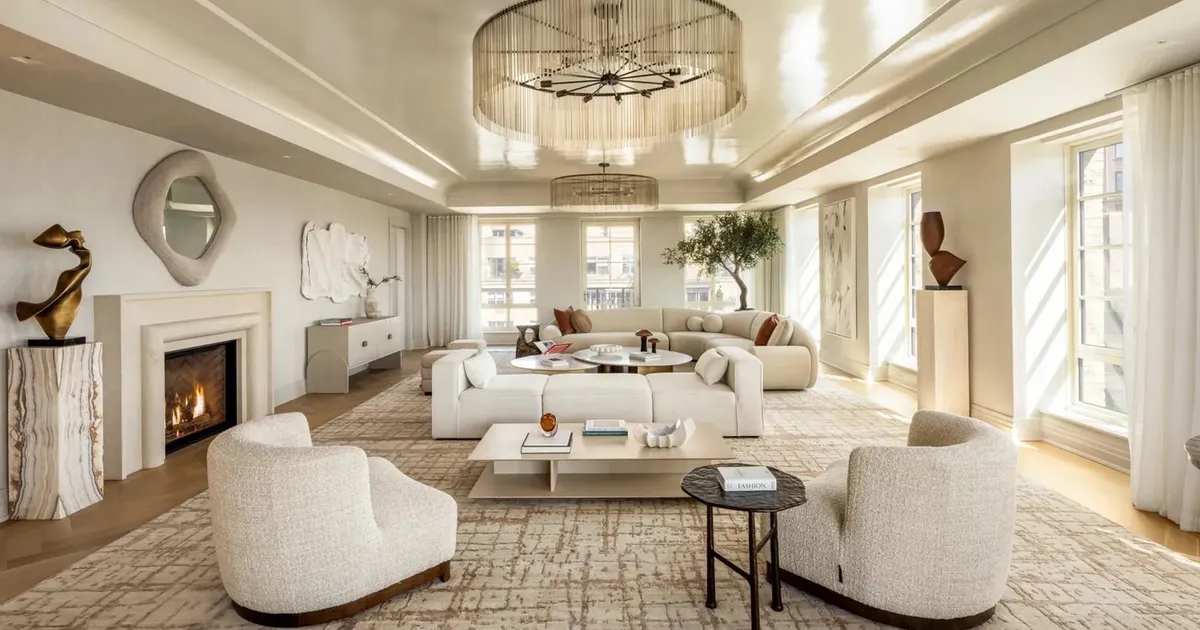
The $50 million penthouse sale at 16 Fifth Avenue represents a troubling paradox. Greenwich Village's historic district designation was designed to preserve neighborhood character and prevent overdevelopment. Yet in practice, the Landmarks Preservation Commission's restrictions have become so onerous that they've eliminated the possibility of moderate, mixed-use development—and instead created a playground exclusively for the ultra-wealthy. When a dissenting Landmarks member compared the building to Godzilla, even after developers trimmed its height, they inadvertently revealed the real problem: the system isn't protecting the neighborhood, it's just making development so difficult and expensive that only megaprojects with nine-figure price tags can survive the process.
Consider what was sacrificed. The report notes that 16 Fifth Avenue replaced 19 rental units with 14 ultraluxury condos. This wasn't incidental—it was the direct consequence of a development approval process so stringent that only billion-dollar-backed firms can afford to navigate it. The building's developers, Madison Realty Capital, initially asked $60 million for the penthouse before cutting $10 million off the asking price. These aren't the margins of a project operating under normal market constraints. These are the financial gymnastics required when a Landmarks hearing takes a 6-5 vote and comparisons to Billionaires' Row become part of the official record.
What's remarkable is that the system's defenders can point to exactly one defensible justification: the previous building was "so unremarkable in architecture." That concession reveals the entire framework's weakness. If the worst offense of the replaced building was being unremarkable, then the Landmarks process isn't about preservation at all—it's about curating a museum district where only the most architecturally significant (and financially viable) projects get built. As Wilson Parry of PropertyScout noted in the report, "The supply is like zero." That's not preservation; that's artificial scarcity by design.
The irony cuts deeper when examining what's happening just outside the historic district. The Greenwich Spire, located at Fifth Avenue and 13th Street but just beyond Landmarks jurisdiction, is already 11 units sold with an unlisted penthouse expected to ask $70 million. Without the Landmarks constraint, development proceeds. Without the artificial bottleneck, prices don't reach astronomical levels simply to absorb approval costs. The question becomes: is Greenwich Village better served by the carefully curated 16 Fifth Avenue, or would it be better served by allowing more diverse development that actually preserves affordability alongside architectural character?
The report itself suggests the answer. Five condo projects off Fifth Avenue have launched in the last year, but as Ryan Kaplan observed, 16 Fifth Avenue is "the last that ever will" be built on lower Fifth Avenue. The Landmarks process has effectively created a permanent development freeze—meaning that any neighborhood evolution will now happen only in the margins, where buildings fall just outside protection zones. That's not preservation. That's preservation theater, performed for spectators while the ultra-wealthy claim increasingly scarce penthouses at $50 million apiece.